
Sheriff Sale & Michigan's Redemption Period: What Happens and What You Can Still Do
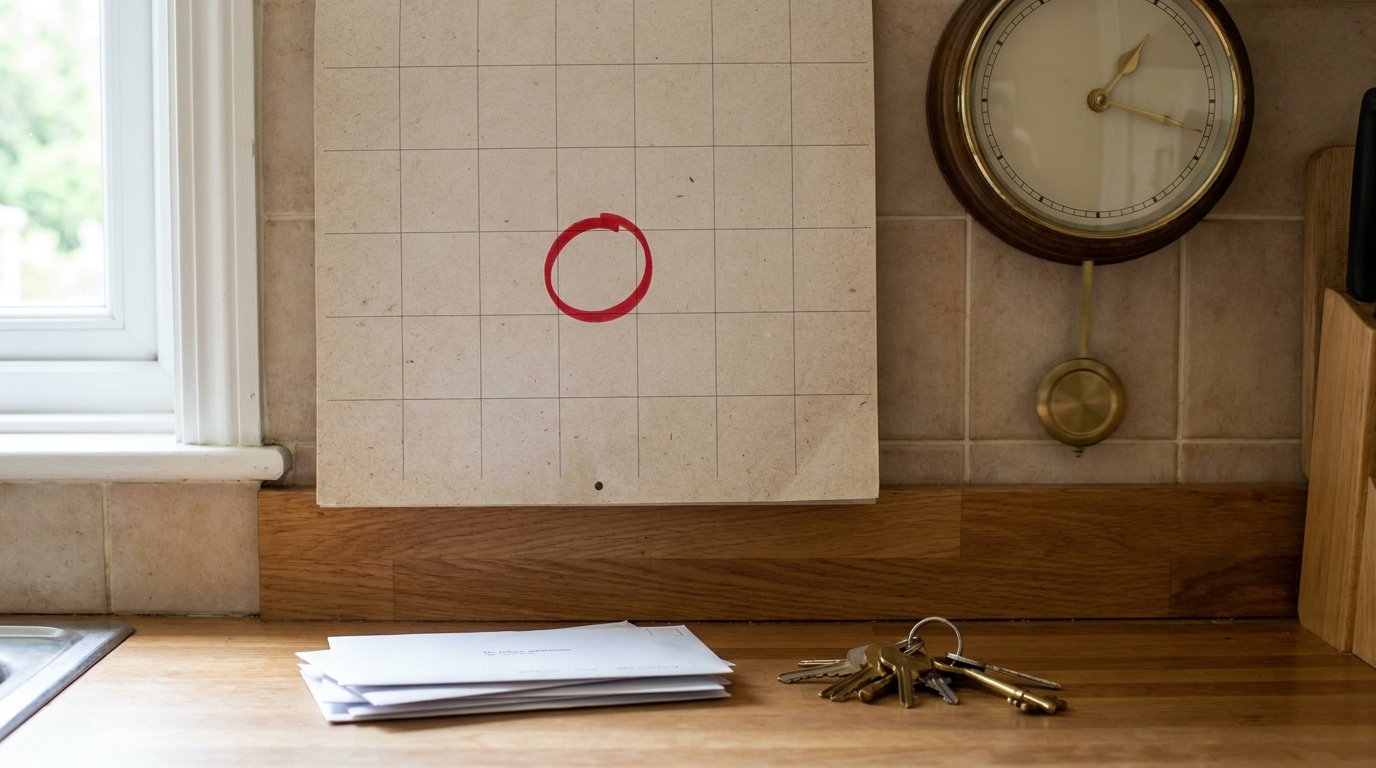
The sheriff's sale is the moment most Michigan homeowners think of as the end. A date gets published in a newspaper, a notice appears on the door, and a few weeks later the house is auctioned on the courthouse steps in a transaction that takes about ninety seconds. It is a hard day. But in Michigan it is not the last day, and that single fact changes what you should do next.
Michigan is a redemption state. After a sheriff sale, the law gives most owner-occupied homeowners a further window — usually six months — in which the property can still be recovered, still be sold, and still be lived in. This guide explains exactly what happens before, during, and after a Michigan sheriff's sale, what the redemption period does and does not allow, and the practical moves that are still open to you at each stage.
If you have not yet mapped where you sit in the wider process, our pillar guide on how to stop foreclosure in Michigan lays out the whole timeline; this article zooms in on the auction and everything after it.
What a Michigan Sheriff's Sale Actually Is
Most Michigan mortgages are foreclosed by advertisement under MCL 600.3204 — a non-judicial process, meaning no lawsuit is filed and no judge signs off. Instead the foreclosing party follows a statutory notice sequence:
- Federal waiting period. Under 12 CFR 1024.41(f), a servicer generally cannot make the first foreclosure filing until the loan is more than 120 days delinquent.
- Published notice. The notice of sale is published once a week for four successive weeks in a newspaper in the county where the property sits (MCL 600.3208).
- Posted notice. Within 15 days of that first publication, a copy must be posted in a conspicuous place on the property itself. That is the paper taped to the door.
- The sale. Under MCL 600.3216, the auction is a public sale to the highest bidder, held between 9 a.m. and 4 p.m. at the circuit court in the county where the property is located. In practice the sale usually lands roughly 60 to 90 days after the first published notice.
At the auction, the foreclosing lender almost always bids first, typically bidding the amount it says is owed — the "credit bid." If no one bids higher, the lender takes the property. If a third-party investor bids more, that investor buys it. Either way the winning bidder receives a sheriff's deed, which is recorded with the county register of deeds. Read that deed carefully when you get a copy: it states the sale amount and the redemption expiration date, and those two numbers govern everything that follows.
One thing the sheriff's deed does not do is transfer full ownership on sale day. Title does not vest in the buyer until the redemption period runs out (MCL 600.3236). Until then you remain the owner in possession, with rights.
The Redemption Period: How Long You Really Have
Michigan's redemption period is set by MCL 600.3240, and the length depends on the property and the loan:
| Situation | Redemption period |
|---|---|
| Owner-occupied residential, typical case | 6 months from the sale date |
| Loan balance at the time of the statutory notice was 66⅔% or less of the original amount borrowed | 12 months |
| Property used for agriculture, more than three acres | 12 months |
| Property judged abandoned under the statute | As short as 30 days (or even less in specific abandonment cases) |
Three details matter more than homeowners expect. First, the clock starts on the sale date, not the date you were notified, not the date the deed was recorded. Second, the "abandoned" shortcut is real — if the home looks empty, mail piles up, and the utilities are off, a purchaser can pursue a dramatically shorter window. Staying in the home, or keeping it visibly maintained and occupied, protects your longer period. Third, redemption periods are strict deadlines. Michigan courts have repeatedly declined to extend them absent fraud or irregularity in the sale, so plan against the date on the deed, not against a hoped-for extension.
What You Can Still Do Inside the Redemption Period
This is the part almost nobody explains clearly. Inside redemption you still have four distinct rights, and each one is worth money.
1. You can live in the home
You remain in lawful possession until redemption expires. The purchaser cannot change the locks, cannot demand rent, and cannot start eviction proceedings during the period (limited exceptions exist for damage or waste under MCL 600.3278). You do not have to move out on sale day, and moving out early can trigger the abandonment rules that shorten your window.
2. You can redeem the property
Redeeming means paying the redemption amount — the sale price stated in the sheriff's deed, plus statutory interest, plus any taxes, insurance, or condominium assessments the purchaser has paid and properly recorded, plus small statutory fees. Payment goes to the purchaser (or the purchaser's representative) or is deposited with the county register of deeds for the purchaser's benefit. Wayne County, for example, runs a formal sheriff's deed redemption process through its register of deeds. When the payment is made and the certificate of redemption is recorded, the sheriff's deed is void and you own your home again, free of the foreclosed mortgage.
Always request the exact payoff figure in writing and confirm it again within a few days of paying — interest and advanced taxes make the number move. A payment that is short by a small amount is not a partial redemption; it is a failed one.
3. You can sell during redemption
Your redemption interest is an asset you can sell. Many Michigan homeowners with meaningful equity list the house during the window, close a normal sale, pay the redemption amount out of the proceeds at closing, and keep the difference. It is a straightforward transaction that title companies handle routinely — but it needs enough runway for a buyer to find you, so a sale plan started in month one works far better than one started in month five. Our guide on stopping a foreclosure before the auction date covers the pre-sale version of the same math.
4. You can claim surplus funds
If the property sold at auction for more than the debt secured by the mortgage, the extra money — the surplus — belongs to you, not to the lender. MCL 600.3252 sets out the claim process: a written, verified claim is filed with the person who conducted the sale, and after the redemption period ends and junior lienholders' rights expire, the surplus is paid out. Surplus is more common than people assume when a third-party investor bids competitively. Ask the foreclosing attorney whether the sale produced one, in writing.
How Redemption Is Usually Funded
The obstacle is rarely willingness. It is that the redemption amount is due as a lump sum, and the same hardship that caused the missed payments has not disappeared. In practice Michigan homeowners fund a redemption in one of five ways:
- Refinancing with a conventional lender. Cleanest when it works, but a recent foreclosure sale and damaged credit make it difficult inside a six-month window.
- Family or personal funds. Retirement accounts, a relative, or a partner buying in. Get any family arrangement documented so the ownership picture stays clear.
- Selling the home. Redemption is paid at closing from the sale proceeds and you keep the remaining equity.
- Equity-based funding. Financing that is underwritten on the property's equity position rather than on credit scores or income documents. This is what All In Horizon does: no credit check, qualification driven by the equity in the home, and a decision typically within 48 to 72 hours — designed for exactly this kind of deadline. Terms depend on the property and an exit plan, and every file is underwritten individually.
- A buyback or land-contract structure. When keeping the family in the home matters more than holding title on day one, some homeowners work with a partner who redeems and then sells the home back on contract.
Our detailed walkthrough of the Michigan foreclosure redemption loan covers documentation, timing, and how the payoff is coordinated with the register of deeds. If you are weighing this against modification, short sale, or a deed in lieu, the honest side-by-side is in foreclosure alternatives compared.
What Happens If the Redemption Period Expires
It is worth knowing the downside plainly, because clarity beats dread. If the period ends without a redemption or a sale, title vests in the sheriff's deed holder under MCL 600.3236. The new owner can then begin summary proceedings in district court to recover possession — a court process with its own notice and hearing, not an overnight lockout. Even then, two things often remain: a surplus claim, if the sale produced one, and the right to negotiate a move-out timeline (sometimes with relocation money) with the new owner, who usually prefers a cooperative handoff to a contested one.
And if the debt was property taxes rather than a mortgage, none of the above applies — county tax foreclosure is a separate three-year process under MCL 211.78a–78m with no redemption after the March judgment. See Michigan property tax foreclosure for that timeline.
A Practical Week-One Checklist After the Sale
- Get the sheriff's deed. Pull it from the county register of deeds. Write down the sale amount and the redemption expiration date.
- Confirm your redemption length. Six months, twelve, or a shortened abandonment period — the deed and the statute settle it.
- Request the redemption payoff in writing from the purchaser or the foreclosing attorney, and ask how it accrues.
- Ask whether there is a surplus and, if so, get the claim requirements in writing.
- Value the home honestly. Market value minus the redemption amount minus other liens is your real equity — the number every option depends on.
- Stay in the home and keep it maintained, keep insurance active, and keep utilities on.
- Pick two paths, not one. Typically redeem-and-keep as path A, sell-during-redemption as path B, and run both until one clearly wins.
- Get free help. HUD- and MSHDA-certified housing counselors are free; HUD's referral line is 800-569-4287. For questions about the sale's validity or your rights, talk to a licensed Michigan attorney.
Frequently Asked Questions
Can I stop the sheriff's sale itself? Yes, up to the moment of sale — by reinstating the loan, paying it off, completing an approved workout, or filing bankruptcy (the automatic stay halts the sale). After the gavel falls, the tool changes from stopping to redeeming.
Do I have to move out after the sheriff's sale? No. You have the right to remain in the home through the redemption period, and leaving early can shorten it.
Can the winning bidder ask me for rent? Not during redemption. They hold a deed that has not vested; you are still the owner in possession.
Is the redemption amount the same as what I owed on the mortgage? Not necessarily. It is the amount stated in the sheriff's deed plus statutory interest and permitted advances. It can be lower than the total debt if the lender bid less than the balance, and higher over time as interest and advanced taxes accumulate.
Can I redeem partially or on a payment plan? No. Statutory redemption is a lump-sum payment by the deadline. That is precisely why homeowners with equity look at redemption funding or a sale.
What if the sale was not conducted properly? Michigan courts can set aside a sale where there was fraud or a defect that prejudiced the homeowner, but the bar is high and the window is short. This is an attorney question, and it should be asked immediately, not near the deadline.
The Bottom Line
A Michigan sheriff sale is a milestone in the process, not the conclusion of it. The law hands you a defined stretch of time afterward — most often six months — in which you can stay in your home, redeem it, sell it on your own terms, and claim any surplus the auction produced. Those are real rights with real dollar value attached, and they belong to you, not to the bidder holding the deed.
The homeowners who come through this well are almost never the ones with the most money. They are the ones who found out their exact expiration date in week one, learned what their equity was worth, and ran two plans in parallel instead of waiting to see what happened. If you do nothing else this week, get the deed, mark the date on a calendar, and make one phone call to a free counselor. From there, the situation is something you are managing rather than something happening to you.
Selling is often the cleanest way to use that redemption window. See how to sell a house before foreclosure in Michigan for what a redemption-period closing involves and how to price for a certain close.
Inside your Michigan redemption period and sitting on real equity? Find out what your options look like before the date passes.
See if your home qualifies ->All In Horizon provides asset-based bridge financing. Loan availability, terms, and timing depend on the property, equity position, and exit plan, and are subject to underwriting. This article is educational and is not financial, legal, or tax advice. Foreclosure and redemption rules are fact-specific; nothing here is a substitute for guidance from a licensed Michigan attorney or a HUD-certified housing counselor.